
Did New Hempstead Residents Know There Was an Election?
The village passed resolutions, placed a newspaper notice, and still left most of its residents unaware that every seat on the Board was on the ballot.

New York State Election Law § 15-104 requires every village to publish notice of its elections three times.1 The first notice must appear at least four months before the election, listing every office to be filled and the length of each term. The second must appear at least ten days before, listing the polling place, the hours the polls will be open, and the names and addresses of all nominees. The third must be posted in at least six conspicuous public places within the village, not less than one day before the election. The Village of New Hempstead held a village election on March 18, 2026, in which Mayor Abe Sicker, incumbent Trustees Marc Schiffman and Shimon Greenwald, and trustee candidate Shimshon C. Berman appeared on the ballot. These notice requirements applied to that election.
The village took some steps. On November 24, 2025, the Board of Trustees passed two resolutions: one designating village hall as the sole polling place and authorizing one election district, and a second setting polling hours from 9am to 9pm.2 A notice appeared in the newspaper. But the resolutions did not identify which offices were to be filled or the terms of those offices, which is the specific information the statute requires for the first notice.3
The village knew what compliance looked like, because it had done it correctly the year before. On November 25, 2024, for the 2025 special village election, the Board passed a single resolution that designated the polling place, set the hours, and stated that “the office to be filled are one (1) trustee.”4 For the 2026 election, with the mayor and three trustee seats on the ballot, the Board passed two resolutions that said more procedurally and less substantively. The one piece of information the statute specifically requires for the four-month notice was the one piece the 2026 resolutions omitted.
There is a timing problem as well. Four months before March 18 is November 18. The Board meeting at which both resolutions were adopted took place on November 24, six days after the statutory deadline for the first notice.
The village’s own minutes confirm a pattern of documenting publication when it occurs. The December 17, 2024 minutes record that the budget public hearing notice “ran in the Rockland Journal News on December 1, 2024, affidavits of Notice and postings were timely.” The ZBA minutes document comparable publication confirmations for zoning hearings.5 No comparable language appears in any set of Board of Trustees minutes for the 2026 election. No resolution authorizes publication of the election notices. No resolution confirms that notices were published or posted. No minutes document affidavits of notice and postings for the election.
The only other election-related action in the record is the February 24, 2026 Board meeting, at which the mayor appointed two election inspectors, twenty-two days before the election.6 That is the entirety of the documented record: two resolutions that omitted the required content, adopted six days late, one newspaper notice, two inspector appointments, and no evidence of the six conspicuous postings the statute requires.
For comparison, the Village of Upper Nyack, which held its election on the same date, posted detailed election information on its website weeks in advance, including the offices to be filled, voter registration deadlines, absentee ballot procedures, and the nominating petition filing window.7
The first indication many residents received that an election was taking place was a letter of endorsement circulated on or about March 15, 2026, three days before the election.8 The letter, signed by fifteen individuals including thirteen rabbis and two community representatives, urged residents to vote for the candidates listed on the ballot. It did not describe any issue facing the village. It did not mention land use, development, zoning, or any policy position held by the candidates it endorsed. Its case for the current board rested entirely on the board’s accessibility and responsiveness to mosdos.
The letter raises questions its authors may not have intended. A letter signed by thirteen rabbis endorsing a slate of candidates could be read as a binding rabbinic ruling, or simply as a political endorsement; the letter itself does not clarify which. Its sole stated basis for supporting the current board is institutional access.
The letter acknowledged that “there is a write in campaign currently underway,” which raises a question of timing. If the endorsement letter served as the vehicle by which many residents learned there was an election at all, and if the letter simultaneously urged those residents to vote for the listed candidates while noting that a competing campaign existed, then the letter functioned not merely as an endorsement but as the de facto election notice for some portion of the electorate.
The election results themselves suggest how many residents knew. In 2025, the village’s trustee election drew a total of fifty voters.9 In 2026, with a write-in campaign actively circulating through word of mouth in the days before the election, turnout increased to 377 voters. Sicker received 318 votes. The write-in candidate received 49 votes.10
That is a 654% increase in turnout over the prior year. The write-in campaign, launched approximately three days before the election with no formal infrastructure, no nominating petition, no party backing, and no budget, reached enough voters to increase total participation by more than 300 people. The implication is straightforward: the additional 327 voters who showed up in 2026 did not show up in 2025 because they did not know there was an election in 2025. Whatever reached them in 2026 was not the village’s notice. It was word of mouth.
Election Law § 15-104 exists to ensure that residents of a village have adequate notice and opportunity to participate in self-governance. The statute establishes a legal obligation. It then removes the only consequence that would compel compliance. Section 15-104(5) provides that the failure of the village to publish and post all required information “shall not invalidate the election” for candidate races.11 The only vote that gets voided for lack of notice is a vote on a proposition. The election of candidates stands regardless.
What remains available to residents who believe the notice requirements were not met is limited. A formal complaint to the New York State Board of Elections, a complaint to the Rockland County Board of Elections, a request to the State Comptroller’s office to review village compliance with Election Law, or an Article 78 proceeding seeking prospective compliance, which is a court order requiring the village to follow the law in future elections. None of these remedies changes the outcome of the March 18 election.
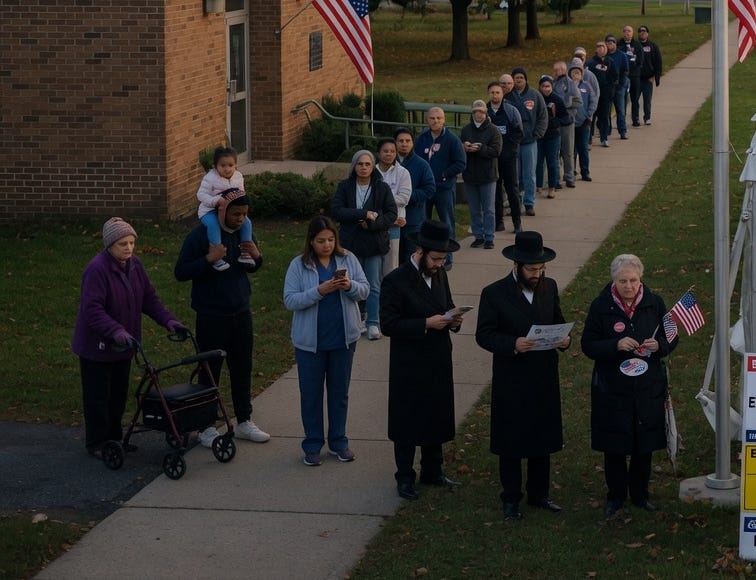
The Village of New Hempstead documents when it publishes legal notices. It records affidavits of notice and postings for budget hearings and zoning applications. It passed a resolution for the 2025 election that identified the office to be filled. For the 2026 election, in which every seat on the village’s governing body was on the ballot, the village passed resolutions that omitted the required content, adopted them after the statutory deadline, and left no documented record that the notices required by law were published and posted as the statute requires.
The current Board of Trustees of the Village of New Hempstead was elected by whatever number of residents knew there was an election and chose to participate. Whether that number reflects the will of the village or merely the reach of a last-minute endorsement letter is a question each resident can answer for themselves.
Endnotes
1. N.Y. Election Law § 15-104.
2. Village of New Hempstead Board of Trustees Regular Meeting Minutes, November 24, 2025, Resolution BOT 2025-96 (designating village hall as sole polling place for the March 18, 2026 general village election and authorizing one election district) and Resolution BOT 2025-97 (scheduling polling hours from 9am to 9pm).
3. N.Y. Election Law § 15-104(1): The first notice, published at least four months before the election, must state “every office to be filled at such election and the length of the term of each.”
4. Village of New Hempstead Board of Trustees Regular Meeting Minutes, November 25, 2024, Resolution BOT 2024-89: “Resolved, that the village board of the Village of New Hempstead hereby adopt Village Hall as the Sole Polling Place for the 2025 Special Village Election. The Hours during which the polls shall be open for voting 9:00am-9:00pm. the office to be filled are one (1) trustee.”
5. See, e.g., Village of New Hempstead Board of Trustees Regular Meeting Minutes, December 17, 2024 (budget public hearing): “It Ran in the Rockland Journal News on December 1, 2024, affidavits of Notice and postings were timely.” See also ZBA Minutes, December 11, 2024 (”Ms. Bettello stated it ran in the Rockland Journal News November 27, 2024 affidavits of notice and postings”).
6. Village of New Hempstead Board of Trustees Regular Meeting Minutes, February 24, 2026 (Mayor appoints Sandy Persaud and Alan Wiener as Election Inspectors for the 2026 Village Elections).
7. Village of Upper Nyack, “2026 Upper Nyack Village Elections Information,” posted February 27, 2026 at uppernyack.gov, listing offices to be filled, voter registration deadlines, absentee ballot procedures, and nominating petition filing windows.
8. Letter to “New Hempstead Residents,” signed by thirteen rabbis and two community representatives, circulated on or about March 15, 2026.
9. “Election Night Results: Victories in Airmont, Chestnut Ridge, Pomona, Montebello, and New Hempstead,” Monsey Scoop, March 19, 2025 (reporting 50 total votes cast in the 2025 New Hempstead village election).
10. “New Hempstead & Wesley Hills Election Results: Sicker Reelected Mayor, Trustees Secured,” Monsey Scoop, March 19, 2026.
11. N.Y. Election Law § 15-104(5): “[T]he failure of the village to publish and post all required information shall not invalidate the election provided, however, that a vote on a proposition shall be void if the required notice of