

Rockland County Family Court
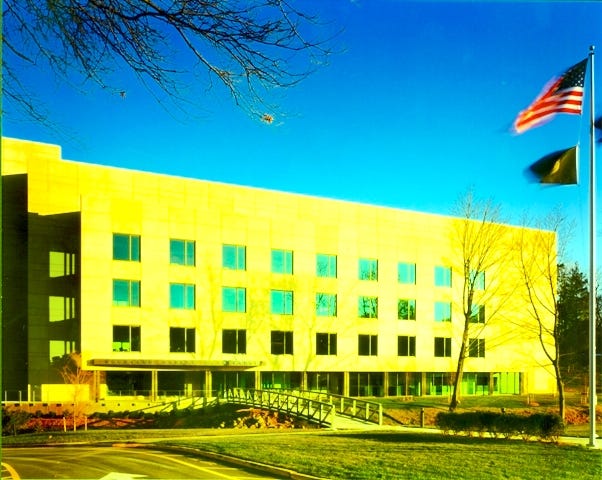
In child support proceedings before the Rockland County Family Court, Hon. Rachelle C. Kaufman and Hon. Rachel E. Tanguay, then serving as Acting Justice of the Supreme Court, presided over a case in which Richard Sims, representing himself without counsel and residing in Alabama at the time, was declared the father of two children, ordered to pay child support, and denied the genetic testing that New York law required the court to provide.
Sims was never heard on the merits. He has stated that he “never had a fair day in court.” The procedural record does not contradict him.
Judge Tanguay has since been elected to the New York State Supreme Court, Ninth Judicial District, for a term extending through 2038.[1]
New York Family Court Act Section 532(a)[5] does not leave genetic testing to judicial discretion. It imposes a mandate:
The court shall advise the parties of their right to one or more genetic marker tests or DNA tests and, on the court’s own motion or the motion of any party, shall order the mother, her child and the alleged father to submit to one or more genetic marker or DNA tests.
The word “shall” appears twice. The court is required to advise the parties of the right to testing. The court is required to order testing when any party requests it. The only statutory exceptions are written findings based on res judicata, equitable estoppel, or the presumption of legitimacy of a child born to a married woman.
Sims’s name appeared on only one of the two children’s birth certificates. Paternity was contested. Judge Kaufman did not order genetic testing for the child whose birth certificate did not bear Sims’s name, which is the usual procedure.
Instead, Judge Kaufman entered a default judgment declaring Sims the father of both children.
Whether the statutory exceptions were applicable, and whether the court made the required written findings to invoke them, are questions the record should answer.
The procedural failures began before the merits were ever reached. Judge Kaufman scheduled Sims for a remote hearing. The hearing did not take place.
The necessary participation forms were not transmitted to Sims in advance. The Fourteenth Amendment establishes a minimum standard for notice:
Notice [must be] reasonably calculated, under all the circumstances, to apprise interested parties of the pendency of the action and afford them an opportunity to present their objections.
-- Mullane v. Central Hanover Bank & Trust Co., 339 U.S. 306, 314 (1950)[7]
Sims did not receive the forms. Because he was residing in Alabama, the remote hearing was his only means of participating in the proceeding. He did not appear. A court clerk, not Sims, attempted to explain the situation to Judge Kaufman.
According to the record, Judge Kaufman became rude and disrespectful toward the clerk. The clerk’s recommendation that Sims file a motion for a new hearing date was a direct consequence of Judge Kaufman’s response. The New York Code of Judicial Conduct is explicit about the standard expected:
A judge shall be patient, dignified, and courteous to litigants, jurors, witnesses, lawyers, and others with whom the judge deals in an official capacity.
-- New York Code of Judicial Conduct, Canon 3(B)(4)[13]
Judge Kaufman’s interactions with a judicial officer from another state involved in the matter were similarly characterized as uncooperative. Interstate judicial cooperation in child support enforcement under the Uniform Interstate Family Support Act is not a matter of discretion. It is a statutory obligation.
After the hearing that Judge Kaufman failed to conduct, and after Sims’s subsequent motions went unaddressed, Judge Kaufman entered a default judgment.
The default did two things: it removed Sims from the proceedings entirely, and it declared him the father of both children without a paternity test. The Supreme Court has described the constitutional weight of what was at stake:
The interest of a parent in the companionship, care, custody, and management of his or her children is cognizable and substantial… It is plain that the interest of a parent in the companionship, care, custody, and management of his or her children ‘come[s] to this Court with a momentum for respect lacking when appeal is made to liberties which derive merely from shifting economic arrangements.’
-- Stanley v. Illinois, 405 U.S. 645, 651 (1972)[6]
Judge Kaufman entered a paternity default against a man whose name appeared on only one of two birth certificates, without ordering the genetic testing that FCA §532(a) mandates when paternity is contested. That adjudication imposed lifelong financial and legal obligations on the basis of a proceeding Sims never participated in, concerning a child whose biological relationship to him was never established by evidence.
Sims filed motions seeking relief from the default and the paternity adjudication. According to his federal complaint, these motions were neither granted nor denied on the merits. They were not addressed. The Code of Judicial Conduct establishes what the judges were required to do:
A judge shall hear and decide matters assigned to the judge except those in which disqualification is required… A judge should dispose of all judicial matters promptly, efficiently, and fairly.
-- New York Code of Judicial Conduct, Canon 3(B)(1)[12]
By not ruling on Sims’s motions, the court left him without a mechanism to challenge the default or the paternity adjudication within the state system. This matters, because the federal courts would later tell Sims that the state courts were exactly where he needed to seek relief.
The consequences of these decisions extended well beyond Rockland County. Sims had not previously been in the child support system. The order entered by Judge Kaufman placed him there for the first time, on the basis of a default in a proceeding he was never heard in, for a child whose paternity was never tested.
That order was then enforced in Alabama, where Sims was required to retain counsel at his own expense to address an order he contends was entered without adequate process. The financial burden was significant. An Alabama court attorney involved in the enforcement proceedings independently remarked on the apparent unfairness of Sims’s treatment.
Sims filed a federal civil rights action on August 18, 2023, in the Northern District of New York, docket number 1:23-cv-01013.[9] The court dismissed the case on February 14, 2024. The dismissal rested on three doctrines, none of which addressed the substance of what Kaufman and Tanguay did.
The first was absolute judicial immunity:
A judge will not be deprived of immunity because the action he took was in error, was done maliciously, or was in excess of his authority; rather, he will be subject to liability only when he has acted in the ‘clear absence of all jurisdiction.’
-- Stump v. Sparkman, 435 U.S. 349, 356-57 (1978)[8]
Because Kaufman and Tanguay acted within the jurisdiction of the Family Court, the immunity doctrine shielded them from damages. This is legally correct. It also means that judges who fail to order statutorily mandated testing, who fail to conduct scheduled hearings, and who fail to rule on pending motions face no personal liability for those failures, provided they occurred within their jurisdiction. The doctrine protects judicial independence. It does not address what happened to Richard Sims.
The second was Younger abstention, which prevents federal courts from interfering with ongoing state proceedings.[10] In practice, this directed Sims, a resident of Alabama, back to the same Rockland County courts in which his motions had already gone unaddressed. The third was the Rooker-Feldman doctrine, which bars federal courts from reviewing state court judgments.[11] Together, these three doctrines foreclosed federal review of what Kaufman and Tanguay did. They did not establish that what Kaufman and Tanguay did was correct.
The Supreme Court has established the constitutional minimum for procedural due process:
The fundamental requirement of due process is the opportunity to be heard ‘at a meaningful time and in a meaningful manner.’
-- Mathews v. Eldridge, 424 U.S. 319, 333 (1976)[2]
Measured against this standard, the conduct of the Rockland County Family Court is difficult to reconcile with the requirements of due process. Judge Kaufman did not transmit the forms necessary for Sims to attend his hearing. Judge Kaufman entered a default after the hearing she failed to conduct. Judge Kaufman adjudicated paternity for both children without ordering the genetic testing that FCA §532(a) requires. The court did not rule on Sims’s subsequent motions. At no point in the proceedings was Sims heard on the merits of the paternity claim. As the Supreme Court observed in Boddie v. Connecticut, access to the courts is itself a fundamental aspect of due process.[4] Richard Sims had access to the Rockland County Family Court. What he did not have was a hearing.
The record in Sims v. Kaufman is specific. FCA §532(a) required genetic testing. The court did not order it. The Fourteenth Amendment required notice and an opportunity to be heard. The court did not provide them. The Code of Judicial Conduct required the judges to be patient, dignified, and courteous, and to hear and decide matters assigned to them promptly. The record raises questions about whether those obligations were met.
The federal court’s dismissal did not resolve these questions. It declined to reach them. Judicial immunity, Younger abstention, and Rooker-Feldman are procedural doctrines that determine which court may hear a claim. They do not determine whether the claim has merit. The question of whether Judges Kaufman and Tanguay met their statutory and ethical obligations in the Sims proceedings remains unanswered.
Judge Tanguay now sits on the New York State Supreme Court. The obligations that attached to her prior role did not require a federal court to enforce them. They required her to follow them.
End Notes
[1] Ballotpedia, “Rachel Tanguay-McGuane,” accessed 2025; Trellis.Law, Judge Rachel E. Tanguay profile; Rockland Report, Jan. 2024.
[2] U.S. Const. amend. XIV, §1; Mathews v. Eldridge, 424 U.S. 319, 333 (1976)
[3] New York Code of Judicial Conduct, Canon 2(A) (2023)
[4] Boddie v. Connecticut, 401 U.S. 371, 377 (1971)
[5] New York Family Court Act §532(a) (2023)
[6] Stanley v. Illinois, 405 U.S. 645, 651 (1972)
[7] U.S. Const. amend. XIV, §1; Mullane v. Central Hanover Bank & Trust Co., 339 U.S. 306, 314 (1950)
[8] Stump v. Sparkman, 435 U.S. 349, 356-57 (1978)
[9] Order of Dismissal, Sims v. Kaufman, No. 1:23-cv-01013, N.D.N.Y. (issued February 14, 2024)
[10] Younger v. Harris, 401 U.S. 37, 43-44 (1971)
[11] Rooker v. Fidelity Trust Co., 263 U.S. 413 (1923); D.C. Court of Appeals v. Feldman, 460 U.S. 462 (1983)
[12] New York Code of Judicial Conduct, Canon 3(B)(1) (2023)
[13] New York Code of Judicial Conduct, Canon 3(B)(4) (2023)